All Wishes Come True! Passes RMB 600 Million: Why China’s Folk-Fantasy Animation Keeps Accelerating
Updated July 26, 2026: All Wishes Come True! has passed RMB 600 million after eight days, with about 16.445 million admissions reported. This analysis examines its box-office trajectory, word of mouth, Eight Immortals ensemble, Penglai aesthetics and the limits that still matter.

HubGZ
Author
Quick Answer
Updated July 26, 2026: All Wishes Come True! has passed RMB 600 million after eight days, with about 16.445 million admissions reported. This analysis examines its box-office trajectory, word of mouth, Eight Immortals ensemble, Penglai aesthetics and the limits that still matter.
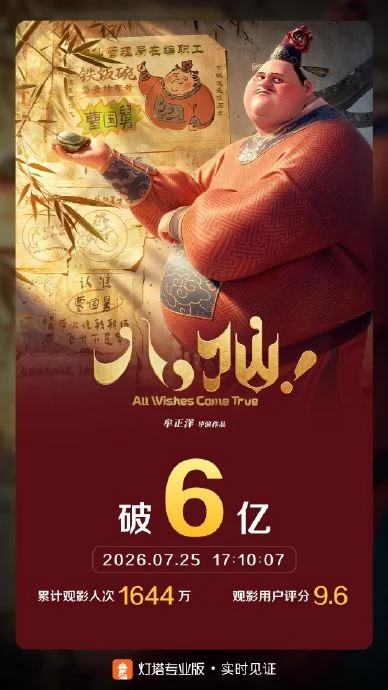
Updated at 07:10 on July 26, 2026, Vietnam time: the Chinese folk-fantasy animated feature All Wishes Come True! (《八仙!》) has passed RMB 600 million at the box office. Taopiaopiao reported, using real-time Lighthouse Professional Edition data, that the milestone was reached at 17:10 on July 25. Maoyan also confirmed cumulative revenue above RMB 600 million. Da Xiang News reported that the result came after eight days of screenings and approximately 16.445 million admissions.
Using a reference rate of roughly VND 3,884.78 per CNY on July 24, RMB 600 million is approximately VND 2.33 trillion. This conversion is only meant to show scale for Vietnamese readers. It is not the producer’s profit. Gross box office is divided among cinemas, distributors, taxes and other contractual participants before production and marketing costs are considered.
The milestone matters because it forms a visible trajectory. The film passed RMB 400 million on the evening of July 22, RMB 500 million on July 24 and RMB 600 million on the afternoon of July 25. This suggests that ticket demand remained active after the initial launch. It does not guarantee a final total, because box office changes with scheduling, weekdays, competitors and promotion.
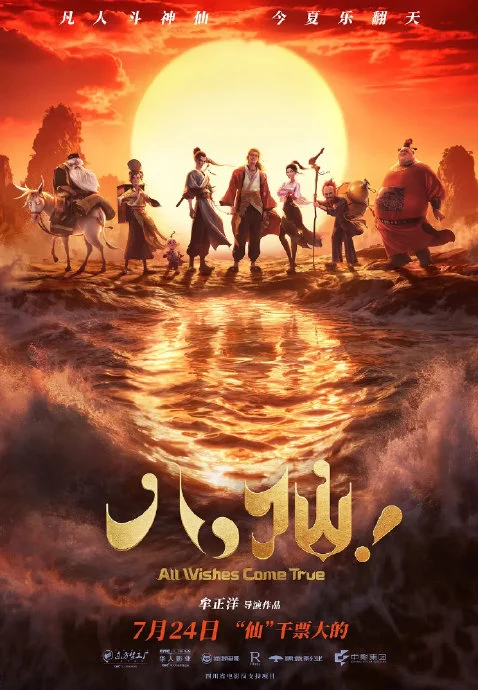
The more important question is why a familiar legend can still function as new commercial cinema. Instead of beginning with eight fully formed immortals, the film returns to a time when they were ordinary people with fear, ambition, flaws and practical survival skills. Becoming immortal is reframed from a reward of power into a process of accepting responsibility for others.
Readers can explore more Chinese animation coverage and donghua analysis on HubGZ.
What the move from RMB 400 million to RMB 600 million tells us
Box office normally rises fastest during previews, opening day and the first weekend. After that, a film depends increasingly on audience recommendations, family appeal, competition and the ability to retain screenings. The movement from RMB 400 million on July 22 to RMB 500 million on July 24 and RMB 600 million on July 25 shows that demand did not collapse immediately after launch.
This does not mean every viewer agrees. Online reactions still include criticism of pacing, humor and the distance between the adaptation and familiar versions of the legend. Yet sustained revenue demonstrates that a sufficiently large audience is willing to buy tickets and recommend the film.
Three measurements should remain separate. Gross box office measures accumulated ticket revenue. Admissions estimate the number of visits. Platform ratings represent self-selected user communities. When all three are favorable, the film has a strong environment, but none of them alone proves absolute artistic quality.
Time-stamping each milestone is essential. “RMB 600 million at 17:10 on July 25” is a verifiable event. A projection that the film may eventually reach a much larger total remains a forecast. HubGZ keeps those two categories separate.
Gross revenue is not profit
The number displayed by ticketing services first passes through cinemas and distribution systems. Taxes, sector fees and cinema shares are removed before the remaining revenue is divided among distributors, producers and contractual partners.
A feature-length animated film also carries costs for development, writing, storyboarding, design, 3D modeling, rigging, animation, effects, lighting, rendering, sound, voice performance, post-production, marketing and release operations. Commercial success must ultimately be evaluated against this cost structure.
Even so, RMB 600 million has strategic value. It improves negotiating power for screenings, licensing, merchandise, brand partnerships and international distribution. It also signals that Chinese mythology outside the most frequently adapted Journey to the West and Nezha traditions can reach a broad market.
Lu Dongbin: a sword immortal who must learn how to choose
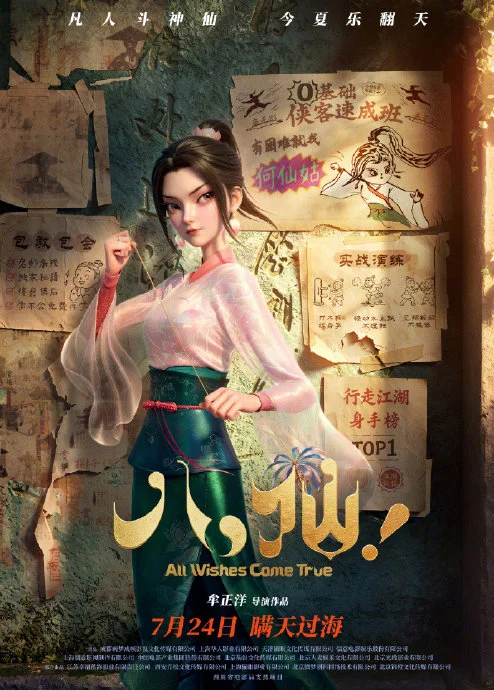
Lu Dongbin is one of the most recognizable members of the Eight Immortals. A visually attractive and righteous swordsman would be easy to market but dramatically thin. The film keeps his heroic identity while placing him in an unfinished stage where passion, pride and confidence can produce mistakes.
The audience already knows that he will become an immortal. The real question is how he defines what is right when personal honor conflicts with collective safety. Winning a duel is different from carrying responsibility. Growth requires retreat, trust and recognition that one person cannot solve every problem alone.
This design makes him accessible to younger viewers. He is not compelling because he is perfect. He is compelling because competence, failure and the chance to correct himself coexist within the same character.
Zhongli Quan: leadership built from visible flaws
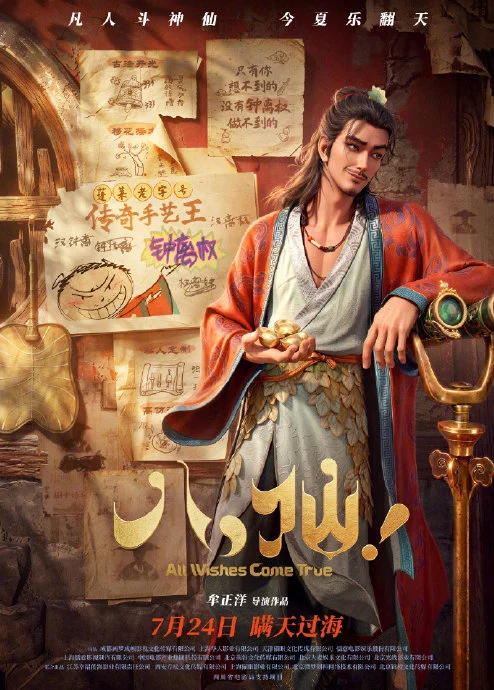
Zhongli Quan can provide comedy while carrying emotional weight. His improvisation, fear and early avoidance of responsibility make him appear unsuited to lead. That is precisely what creates room for transformation.
A convincing group does not need a leader who is always correct. It needs someone who understands each member’s strengths, admits mistakes and accepts danger when plans fail. Zhongli Quan becomes meaningful because his leadership grows from ordinary survival experience rather than predetermined authority.
His contradictions also support word of mouth. Viewers recognize the desire to protect others while fearing inadequacy, the wish to be acknowledged without wanting the consequences and the use of humor to conceal insecurity.
He Xiangu: modern agency without abandoning folk identity
He Xiangu retains the lotus symbol while receiving a more active role. She can act, judge situations and alter group decisions. This modernization works when it does not reduce her to a slogan of strength.
A capable woman can still have limits, errors and relationships. She can care without being trapped in romance and remain gentle without being treated as weak. Her early misunderstandings of the other members also show that the team does not instantly become a family. Trust must be learned.
That process matters because the Eight Immortals are not initially presented as a perfectly coordinated unit. Each person has to stop treating the others as instruments for a mission and begin recognizing them as individuals.
Tieguai Li: street intelligence enters the immortal realm
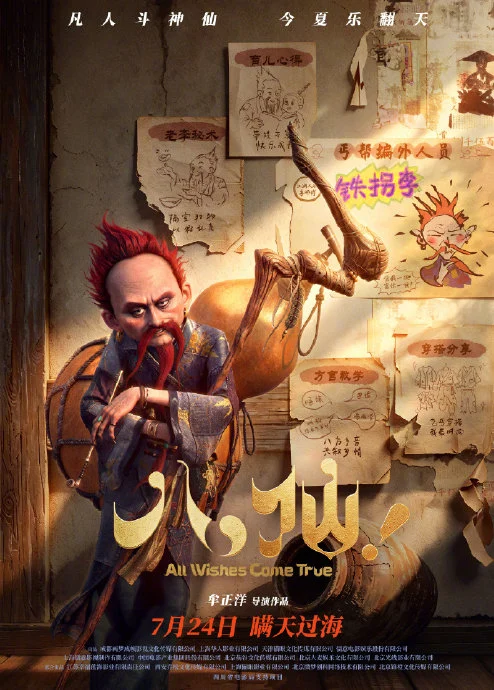
Tieguai Li represents forms of competence rarely labeled as power: understanding markets, reading people, navigating hidden routes and surviving in systems not designed for him. In Penglai, this street knowledge may be more useful than formal moral language.
His gourd and staff preserve familiar iconography, but the deeper continuity is his connection to marginalized people. The film argues that ordinary experience does not need to be discarded before entering a higher realm. It is precisely what allows the group to solve problems that the celestial bureaucracy cannot.
His perspective comes from below rather than from the center of power. That lets him notice practical failures and human costs that characters with rank or institutional confidence may ignore.
Han Xiangzi: music, youth and the search for an individual voice
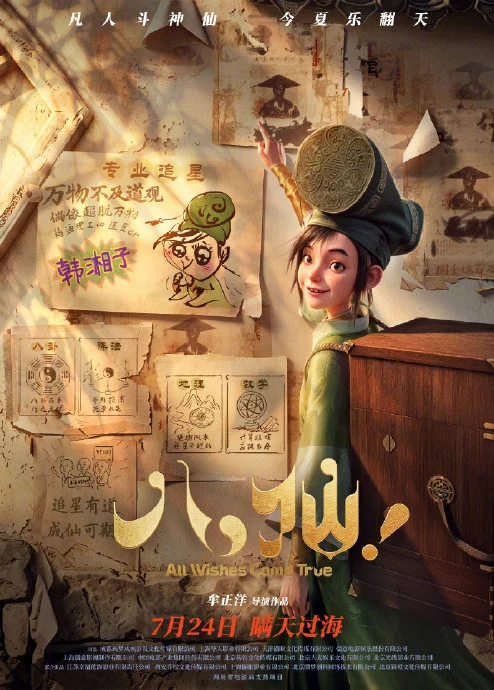
Han Xiangzi remains associated with music but is presented with a younger energy. The flute can function as more than a visual marker; it may express the desire to be heard and a method of influencing conflict without relying entirely on force.
In a group of strong personalities, the youngest member can easily become decorative. He needs decisions with consequences. When music organizes emotion, communication or teamwork, the traditional symbol gains narrative function.
His youth also creates an accessible entry point for viewers who do not know the original legend. They can understand the struggle to find a place in a team before learning the cultural history behind the flute.
Cao Guojiu: privilege, desire and the ability to change
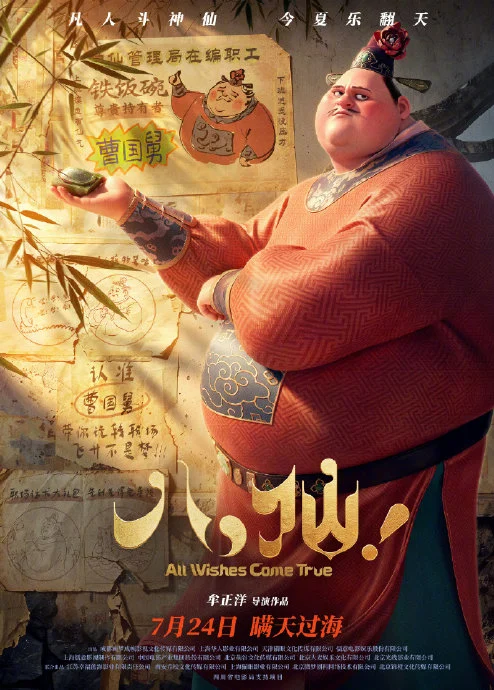
Cao Guojiu carries traces of status and privilege. This allows the film to examine social advantage without turning him into a flat villain. A protected person may misunderstand those who survive through improvisation, while still possessing knowledge and access that the group needs.
His arc becomes meaningful when he learns that rank does not automatically create moral value. Change requires material consequences and choices, not a single declaration. The conflict between social position and personal worth makes the folk figure relevant to modern audiences.
If he accepts personal loss, faces consequences and redirects his knowledge toward the group, the transformation has weight. If privilege disappears after one speech, the arc becomes cosmetic.
Lan Caihe: innocence is not the absence of depth
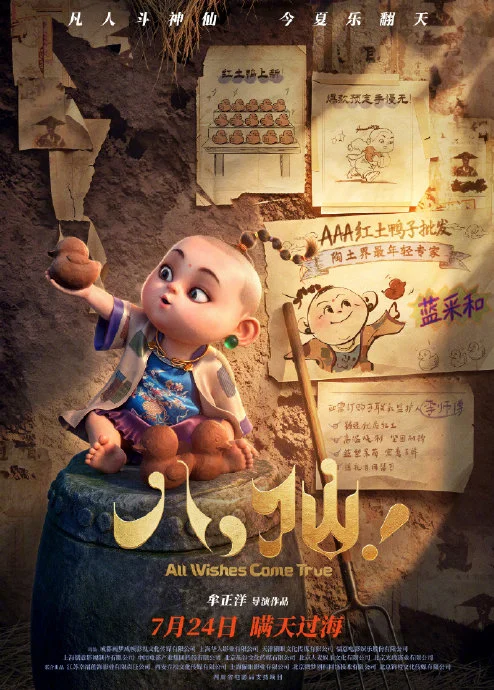
Lan Caihe brings unpredictability, freedom and folk vitality. Such a character can be reduced to comedy or a mascot. Depth appears when innocence produces a distinct way of seeing the world.
Someone less constrained by social assumptions may notice what strategic thinkers ignore. Lan Caihe can break false premises, ask a simple question that reaches the heart of a problem and lead the group out of a dead end of its own creation.
Agency remains essential. A different or childlike character should not exist only to be protected. Concrete choices, limits and contributions make the ensemble genuinely plural.
Zhang Guolao: experience without absolute authority
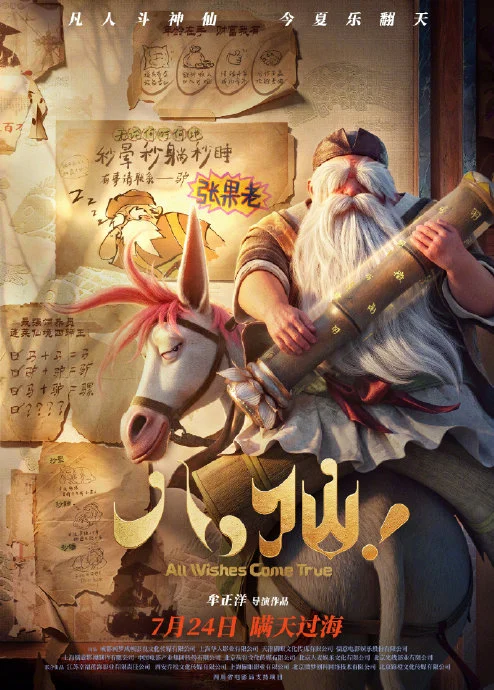
Zhang Guolao introduces age and memory into the ensemble. Humor prevents experience from becoming constant lecturing. He can be eccentric and mistaken while still seeing long-term consequences younger members overlook.
His function should not be to provide every answer. He places facts in historical context, remembers what institutions forget and warns about the cost after victory. The group must still decide, allowing generational difference to become dialogue rather than obedience.
The presence of old and young, wealthy and poor, central and marginal figures is one reason the Eight Immortals remain powerful folk symbols. The team represents a community rather than a single heroic ideal.
Chinese aesthetics as a storytelling system
A mythological film can add curved roofs, clouds, dragons and traditional patterns as decoration. All Wishes Come True! becomes more convincing when these elements participate in world logic.
Penglai needs geography, transportation, hierarchy and daily life. The human marketplace needs labor, smoke and social rhythm. When ordinary survival skills enter the immortal realm, the spaces clash not only in color but in values: official rank and order meet adaptation and relationships.
Materials, light, architectural distance and movement can explain power before dialogue does. Chinese aesthetics therefore function as the skeleton of mise-en-scène rather than a surface layer.
Adaptation and costume debates remain legitimate
RMB 600 million does not make every creative choice correct. Viewers can debate clothing, historical mixtures, character design and the distance from familiar Eight Immortals traditions.
Criticism should distinguish technical inconsistency, deliberate stylistic synthesis and value-level distortion. The legend itself changed across theater, literature and local traditions, so difference from one version is not automatically an error. At the same time, “creative freedom” does not remove the responsibility to research and build a coherent cultural system.
Serious criticism helps the industry move beyond being satisfied with spectacle. It asks whether visual decisions form a consistent world and whether modernization preserves the ethical center of the tradition.
What the industry should learn
Feature animation requires stable coordination across writing, storyboarding, design, modeling, rigging, animation, effects, lighting, rendering, sound and post-production. The commercial performance of the film shows that production coordination is becoming a competitive advantage for Chinese animation.
The lesson is not that mythology automatically sells. Familiar IP creates initial attention, but audiences remain for a point of view, characters and a distinctive world. Copying the surface formula of myth, 3D spectacle and trendy dialogue would quickly exhaust the novelty.
RMB 600 million also creates room for folk traditions beyond the most frequently adapted myths. Investors now have more evidence that other cultural properties can work commercially when creators find a contemporary question rather than merely reproducing an old plot.
What to watch after the milestone
Weekday revenue will show whether word of mouth survives outside the natural advantage of weekends. Screening share and occupancy will reveal whether cinemas are adding sessions because demand is strong or whether revenue is being sustained mainly by expanded supply.
Rating stability matters as the audience broadens beyond early enthusiasts. Response outside the core animation community will determine whether the film becomes a general family hit. Finally, IP conversion through merchandise, music, international distribution and future projects will show whether this is a short surge or the beginning of a durable property.
Conclusion: the number confirms success, but the story determines longevity
Passing RMB 600 million is a current and verifiable commercial update. The move from RMB 400 million on July 22 to RMB 500 million on July 24 and RMB 600 million on July 25 shows continued ticket demand, while 16.445 million admissions indicate substantial reach.
Box office tells us how many people paid, not how long a film will be remembered. The property’s lifespan depends on whether the eight figures become people audiences want to meet again, whether Penglai can support further stories and whether creators continue to put narrative ahead of formula.
The film’s most valuable achievement is not simply turning immortals into new celebrities. It reminds viewers that tradition does not become obsolete by itself; the method of telling determines whether it still reaches people. By sending eight flawed ordinary individuals into the immortal realm, the film restores the Eight Immortals as a story about community, responsibility and choosing what is right without requiring anyone to be perfect first.
Related Topics