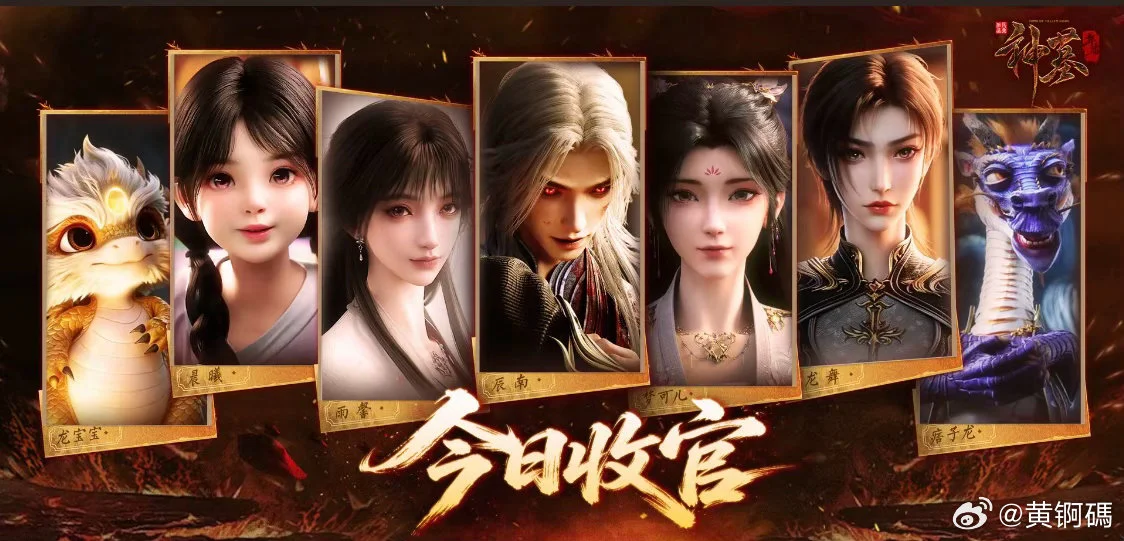
Tomb of Fallen Gods Annual Run Ends: Chen Nan Opens His Inner World, but the Ancient Game Continues
Updated July 24, 2026: Tomb of Fallen Gods completes its regular VIP release after the SVIP finale on July 23. Chen Nan opens his Inner World, the Seven Devil Blades Against Heaven move toward their complete form, while Yuxin, Meng Ke'er, Dongfang Changming and the ancient game remain unresolved.
HubGZ
Author
Quick Answer
Updated July 24, 2026: Tomb of Fallen Gods completes its regular VIP release after the SVIP finale on July 23. Chen Nan opens his Inner World, the Seven Devil Blades Against Heaven move toward their complete form, while Yuxin, Meng Ke'er, Dongfang Changming and the ancient game remain unresolved.
Updated July 24, 2026: the current annual run of Tomb of Fallen Gods has completed its release cycle. The production's official account marked the SVIP finale on July 23, while the previously announced monthly schedule placed the regular VIP release one day later, on July 24. For the broader audience following the standard platform schedule, today is therefore the correct moment to assess the completed season: Chen Nan has opened his Inner World, the Seven Devil Blades Against Heaven have moved closer to a complete form, Yuxin remains the story's emotional center, Meng Ke'er continues to occupy the unstable space between affection and opposition, and Dongfang Changming's return expands the conflict far beyond a single battle.
The official closing message did not suggest that everything had been resolved. It emphasized reunion with loved ones, companionship with friends and resistance against fate, while stating that the “ancient game” has not reached its end. That language describes the structure of Tomb of Fallen Gods accurately. Every recovered memory, resurrected acquaintance and newly understood technique opens another layer of buried history.
This retrospective uses information confirmed by the animation and official promotional material. Community interpretation is not treated as canon, and novel knowledge is not presented as animation fact. The article separates what the current run has resolved from the questions deliberately left for the next chapter.
When did the annual run actually end?
Two dates must be distinguished. The official account posted that the annual run had concluded on July 23. The platform schedule, however, stated that SVIP users received new episodes on Thursdays at 10:00 a.m., while regular VIP users received them on Fridays at 10:00 a.m. July 23 was therefore the SVIP finale, while July 24 completed the regular VIP cycle.
The one-day distinction matters for realtime reporting. Repeating the July 23 statement without explaining access tiers would make a July 24 article appear late or inaccurate. Read together, the official materials show that the finale campaign began with the SVIP release and concluded for the standard audience one day later.
This is why the subject remains fresh today. It is not a recycled recap of an old episode. The finale has just reached the main viewing tier, and the production has published new season-level retrospectives about the characters, relationships and larger meaning of the run.
How far has Chen Nan progressed?
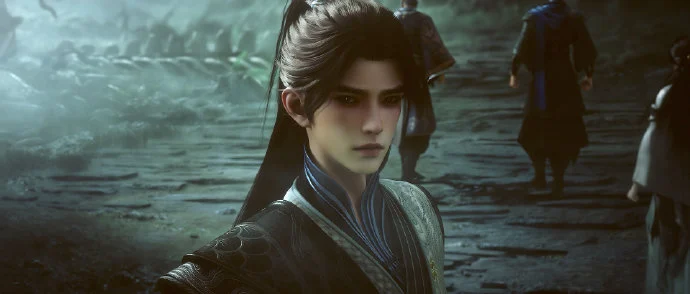
At the beginning of the run, Chen Nan remained a man resurrected after ten thousand years, defined by missing memories and several questions: where is Yuxin, why did the old era disappear, and who placed him on the current board? The season does not answer the entire mystery, but it changes his position in three important ways.
First, Chen Nan no longer merely reacts to pursuit. He creates space, seizes choice and transforms enemy resources into his own tools. Opening the Inner World is the clearest symbol. Instead of remaining trapped inside battlefields designed by others, he possesses a world capable of sheltering, storing, nurturing and reorganizing power.
Second, the Seven Devil Blades Against Heaven are no longer only an uncontrolled last resort. Official material before the finale described the technique as entering a more complete form, suggesting that Chen Nan increasingly understands both its rhythm and its cost. It is not a free upgrade. Every blade places extreme pressure on his body, consciousness and will, and greater force also creates greater risk of self-destruction.
Third, Chen Nan now influences conflicts among several factions instead of merely surviving between them. The Du family, Corpse Driving Sect, orthodox and demonic forces, Kunlun demons, resurrected figures from the old era and characters guarding ten-thousand-year secrets must all account for him. He is not the strongest person in the world, but he has become a variable that cannot be removed through one simple ambush.
The Inner World matters more than a numerical rank increase
Many cultivation stories communicate growth through stages, aura colors or numerical levels. Chen Nan's Inner World represents something broader. It is a domain that belongs to the character, expressing the ability to create a world rather than merely consume power from an existing one.
Official Episode 50 material confirmed the return of the perfect world seed, Chen Nan's opening of the Inner World and his use of the Ancestor Corpse King against the Du family. The sequence contains three layers: the seed is potential, the Inner World is structure, and the corpse king becomes a resource converted into counterattack. Chen Nan does not simply become stronger; he learns to organize strength.
Tactically, the Inner World can store objects, shelter allies, escape spatial pursuit and create home-field advantage. Narratively, it declares that Chen Nan is no longer completely dependent on rules established by ancient powers. He begins constructing an order of his own.
The next installment must preserve limitations. An ability that solves every problem would remove tension. The annual run suggests that the Inner World requires energy, time and control. Future episodes should continue to show boundaries, invasion risk and the cost of containing entities beyond the owner's capacity.
The Seven Devil Blades are strongest when they remain frightening
The production's July 22 message stated that the Seven Devil Blades Against Heaven had entered their “complete form.” This should not automatically be read as absolute mastery. The season's logic suggests that the technique has revealed a fuller structure, while Chen Nan still needs further growth to survive its complete burden.
The technique is compelling because of its contradiction. It allows Chen Nan to cross a power gap, but using it is like placing his own life on the blade. If it becomes a repeatable attack with no lasting danger, it will lose its identity. Each strike matters only while viewers believe Chen Nan may defeat the opponent and destroy himself at the same time.
The season also connects the technique to character. Chen Nan does not use it merely to win. He uses it because he refuses to allow others to determine Yuxin's fate, his friends' survival or his own destiny. “Against Heaven” is therefore not only a technique name; it becomes a way of living.
The next chapter should clarify recovery after use, the relationship between the technique and Chen Nan's bloodline or previous life, and whether it is his only path or one dangerous instrument inside a larger system.
Yuxin remains the season's emotional axis
The official relationship retrospective described Chen Nan and Yuxin as a love that crosses time. Yuxin is more than a former lover who must be rescued. She is the anchor connecting Chen Nan to the world that existed ten thousand years earlier.
Every time Yuxin appears in a different form, the story raises two questions. Is the person before him still the Yuxin he remembers? If memory, body and soul have changed, can an old promise preserve the same love? The animation does not rush an answer, preventing the romance from becoming a simple search mission.
The Corpse King Yuxin storyline at Fengdu Mountain makes the pain concrete. Chen Nan sees a familiar face but confronts a being controlled by the Corpse Driving Sect. He cannot simply destroy the enemy because the person to be saved and the force to be defeated occupy the same body.
The annual run's strength is that Yuxin affects current decisions rather than appearing only in flashbacks. Its weakness is that her own active voice remains limited. The next installment should give her more space to choose, remember and define her own goals, rather than remaining only the symbol Chen Nan pursues.
Meng Ke'er: conflict makes separation more difficult
The official finale material described Chen Nan and Meng Ke'er through intertwined love and hatred. She does not remain fixed as ally, enemy or romantic interest. Her position changes according to factional interest, sect honor and her personal judgment of Chen Nan.
The relationship works because they understand one another's strengths without fully trusting each other. Meng Ke'er knows Chen Nan is not merely impulsive. Chen Nan knows she is not simply a cold representative of her sect. Yet deception, exploitation and repeated attempts to push each other into conflict prevent the relationship from returning to innocence.
At Fengdu Mountain, Meng Ke'er uses the situation to drive Chen Nan into battle with Gu Xi, reinforcing this ambiguity. She may need his power and may want to test his limits, but she is not completely detached from the consequences. That gray area gives their encounters unusually high tension.
The next chapter should avoid repeating the cycle of meeting, misunderstanding, fighting and temporary cooperation. The season has built enough foundation for a more direct question: can trust be rebuilt, or will factional interests always place them on opposite sides?
Long Wu and the companions need independent paths
The official relationship montage also highlighted sacrifice and waiting, commonly associated by viewers with Long Wu. Her quieter trust provides necessary balance in a world full of resurrection, changed identities and ten-thousand-year secrets.
However, the annual run sometimes allows supporting characters to orbit Chen Nan too closely. When he leaves, they wait; when he is endangered, they worry; when he returns, they support him. This reinforces the protagonist's importance but can narrow the world.
Future episodes should give Long Wu, Xiao Chenxi, the Purple Gold Divine Dragon and other companions independent goals, battlefields and decisions capable of changing the larger situation without Chen Nan's presence. An ancient game feels convincing only when every piece possesses will.
Dongfang Changming's return expands the board
Episode 51 material described the resurrection of a mysterious powerful enemy, the return of an old acquaintance carrying killing intent, and the Purple Gold Divine Dragon revealing its true form. Episode data identifies Dongfang Changming and the conflict around the Jade Lotus Platform. This is characteristic of Tomb of Fallen Gods: a figure from the past does not return merely for a fight, but brings the history, debt and secrets of an entire era.
Dongfang Changming matters because his presence moves the story beyond the Du family and the Corpse Driving Sect. Chen Nan is not the only person to return after an impossible length of time. A larger mechanism appears to be bringing ancient cultivators, memories and unresolved hatred into the same present.
Using him only as a high-level opponent would waste that potential. Viewers need to learn why he was resurrected, what his true relationship with Chen Nan was, whether their memories agree, and who benefits when powerful people from the old era keep returning.
His arrival also connects naturally to the official phrase that the ancient game is unfinished. A resurrected figure may be a piece, but may also be someone who once saw the hand moving the pieces.
What does the “ancient game” mean?
The phrase means more than “another season is coming.” In this world, time, death and memory can all be manipulated. A dead person may not have left the board. A resurrected person may not possess complete memory. A destroyed faction may continue acting through inheritance, corpses or preserved will.
The board contains at least four layers. The first is the immediate conflict between Chen Nan and the Du family, Corpse Driving Sect and other powerful enemies. The second is the relationship among orthodox, demonic and demon-clan forces and organizations holding ancient inheritances. The third is the return of people from ten thousand years earlier with incomplete memories. The fourth is the force or law responsible for resurrection, missing memory and the reconstruction of the world itself.
The annual run makes the first two layers visible and opens the door to the third. The fourth remains largely a shadow. That is reasonable for a middle chapter, but the continuation must begin answering foundational questions so mystery does not become endless postponement.
What did the annual run do well?
First, it expanded the world through history, institutions and relationships rather than merely adding stronger enemies. Fengdu Mountain connects the Corpse Driving Sect, Corpse King Yuxin, orthodox and demonic forces and forbidden methods concerning death.
Second, it connected combat to emotional motivation. Chen Nan rarely fights only to demonstrate strength. He fights to find Yuxin, protect companions, break pursuit or win the right to know the truth. Power growth therefore remains attached to story.
Third, techniques express personality. The Inner World represents creation and independent order. The Seven Devil Blades represent rebellion taken to the point of self-destruction. The Purple Gold Divine Dragon's true form connects power to bloodline and memory. When abilities reflect character, combat can tell a story.
Fourth, the art direction established distinct spaces: the oppressive Fengdu Mountain, corpse-energy battlefields, the growing atmosphere of the Inner World and the ancient quality surrounding resurrected powers. Quality is not completely even between episodes, but the IP now has a recognizable visual identity.
What should improve after the finale?
The first issue is information density. New viewers may struggle with the speed at which factions, techniques and old grievances appear. Future episodes should use dialogue, visual charts or brief pauses to explain why a new character matters rather than only announcing that the person is powerful.
The second issue is that several female characters are still framed primarily through Chen Nan's emotions. Yuxin, Meng Ke'er and Long Wu can all become active subjects, but the staging sometimes turns them into anchors for the protagonist's journey. The next season should give them independent goals, choices and consequences.
The third issue is the risk of overusing resurrection. Resurrection is central to the setting, but death loses weight if everyone can return without meaningful loss. Each return should carry a price: missing memory, altered identity, fragmented soul or control by another power.
Finally, climaxes should produce irreversible change. The annual run allows Chen Nan to grow and open his world, but the continuation should let a victory or defeat permanently alter relations among factions instead of allowing everyone to retreat for another similar round.
Five major questions after the finale
1. How independent can the Inner World become?
Its capacity to shelter life, store resources and resist spatial control will determine whether Chen Nan can build a base or save allies from larger forces.
2. What is the ultimate cost of the Seven Devil Blades?
If each use causes only temporary fatigue, the danger will fade. Long-term injury or strict conditions are necessary to preserve its narrative weight.
3. Can Yuxin regain authority over her own fate?
This is essential if the romance is to move beyond the pattern of Chen Nan searching and rescuing. She must eventually choose a path, even if it conflicts with his wishes.
4. How much does Dongfang Changming remember?
His memory may confirm or contradict Chen Nan's understanding of the past, creating a conflict more valuable than simple power comparison.
5. Who is arranging the resurrections?
As more ancient figures appear in the same era, coincidence becomes increasingly unlikely. The hidden hand will determine whether the story finally moves from personal survival to its true cosmic structure.
Where does Tomb of Fallen Gods stand among current 3D donghua?
The series does not rely only on an endlessly continuous release schedule. Its advantage is atmosphere: buried history, uncertain memory and the connection between personal love and a ten-thousand-year design. That gives the adaptation a distinct identity, while also demanding careful exposition.
The value of Tomb of Fallen Gods should not be measured only through rankings or short-term discussion. Its strongest quality is the feeling that everything has happened before, yet no surviving person remembers the whole truth. Compared with politically driven reform stories, its larger conflict emerges through resurrected people, corpses, techniques, lost memory and history returning to the present.
Conclusion: a season ends, fate does not
By July 24, 2026, the annual run has completed its regular release. It transforms Chen Nan from a resurrected man searching for the past into a variable with an Inner World, a more complete understanding of the Seven Devil Blades and enough influence to affect several factions.
Power is not the final answer. Yuxin has not escaped the mechanisms controlling her fate. Meng Ke'er and Chen Nan have not established trust. Dongfang Changming returns with killing intent and hidden history. Supporting characters still require paths of their own. Above all, no one has explained why powerful figures, memories and ancient hatred are converging in the same present.
The official message that the ancient game continues is therefore more than a promise of another season. Chen Nan has become strong enough to see more pieces, but he still cannot see the player. The continuation will be worthwhile only if it preserves the scale of combat while beginning to provide answers capable of changing how viewers understand the entire world of Tomb of Fallen Gods.
Related Topics